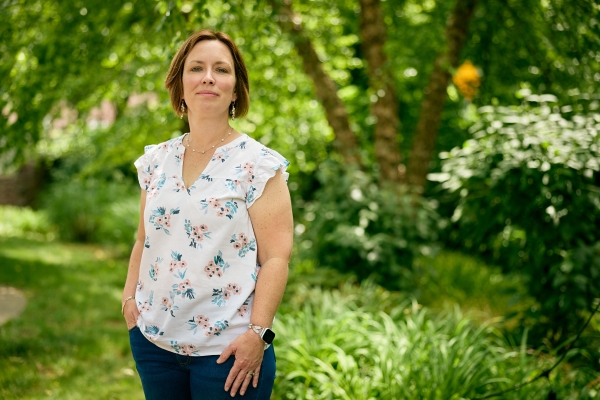
Life is good for Julie M., a computed tomography (CT) technologist. She and her husband recently celebrated their 10th wedding anniversary. They have two healthy daughters ages 9 and 6.
But above all, Julie is in good health. She was diagnosed with epilepsy, a seizure disorder, at age 12. Her mother has epilepsy, which meant Julie was at higher risk for developing the condition.
There’s no cure for epilepsy, but treatments can help prevent seizures. In Julie’s teen years, managing her condition with medications proved challenging. And when she was 16, her doctors told her she was not a good candidate for surgery to reduce or prevent seizures.
“It was trial and error with different drugs to see what worked,” Julie says.
Until her doctor found the right combination of medications, Julie lived with the looming threat of seizures — a frightening event for everyone involved.
Finding expert care at Temple Health
Julie came to the Temple Epilepsy Program in 2007, after her previous doctor retired. She began receiving care from Mercedes P. Jacobson, MD, a neurologist and epilepsy specialist at Temple.
“Dr. Jacobson was highly recommended,” Julie recalls.
Julie also likes the familiarity and comfort of talking with another woman about her health concerns. Having been told hormone changes played a role in triggering her epilepsy as an adolescent, she’s grateful to have a doctor she’s comfortable talking to about how menopause may affect her in future.
When Julie first came to Temple, she had a pressing priority: managing her condition while pregnant.
Seizures during pregnancy raise the risk of complications. But some epilepsy medications can also come with risks for a developing baby. And, as the body changes during pregnancy, people with epilepsy often need adjustments to their medication dosages.
Julie was able to trust that Dr. Jacobson would take excellent care of her.