800-TEMPLE-MED Request Appointment
SEARCH TEMPLE HEALTH

Feeling Fantastic: Cardiac Resynchronization Therapy With Defibrillation Helped John H. Reclaim His Life

View All Stories

Temple tackled his heart problems as a coordinated team

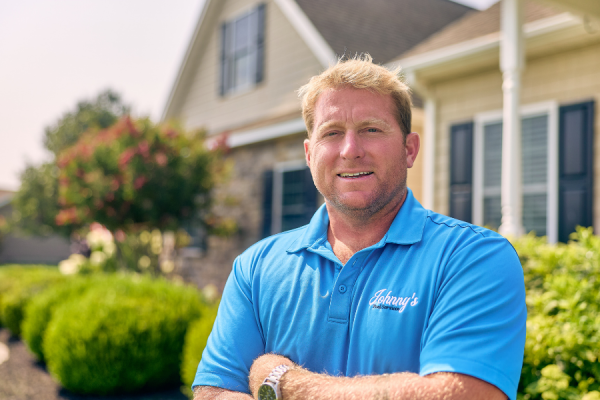
Before John H. had a cardiac device implanted in his chest to control life-threatening heart rhythms and help his weakened heart pump better, he’d spent most of his life battling health problems.

“It really had been a long time coming,” says John, 38.

But these days, he’s confident, upbeat, and full of energy. It’s quite different from how he felt before. 

John survived cancer as a child, but the chemotherapy he received affected his heart.

“They noticed that I had a low ejection fraction [a measure of the heart’s pumping ability],” John says. 

For years, John was able to manage his heart condition with medication. He married and started a family; built two businesses; and participated in activities like bodyboarding, a sport that involves riding ocean waves. 

However, by 2017, John could feel a change. That summer, he began feeling short of breath and having difficulty doing physical activities, including his beloved sport of bodyboarding. 

“While out in the water, I started noticing that I was getting stuck in some situations that I’d never had problems with before,” he says. “I was feeling some anxiety coming on because of my physical limitations while holding my breath and swimming for periods of time. I noticed that something was changing.”

At work, John pushed through, despite worsening symptoms that often made him miserable.

“I knew there was something wrong, but I didn’t have time to stop,” he says. 

Around this time, he was diagnosed with chronic heart failure—when the heart can’t pump as much blood as the body needs. Heart failure is usually caused by conditions that damage or strain the heart muscle, such as heart attacks, high blood pressure or cardiomyopathy. 

Heart failure causes the body to hold on to water, and John had to be hospitalized because he was retaining too much fluid.

John also began experiencing joint pain and other unexplained symptoms. He saw several doctors, searching for answers, until he found one who suspected that, in addition to heart failure, John had sarcoidosis. That’s an inflammatory condition that can affect multiple organs, including the lungs and the heart. In John’s case, sarcoidosis was a cause of his cardiomyopathy and heart failure, although his childhood chemotherapy likely also played a role.

When John asked for a specialist, his doctor recommended Temple.

A team of experts on his side 

In the fall of 2025, John and his wife, who was by her husband’s side at every appointment, met with Rohit Gupta, MD, Director of Temple’s Sarcoidosis Program. Right away, Dr. Gupta told John he would benefit from team-based multidisciplinary care with a cardiologist. 
It was amazing. He assembled a team that day, got me in with a cardiologist to start going over the different tests in my chart and everything else. It was awesome. They went intensively through my charts, from when I was a child all the way up to the present.

John

In addition to Dr. Gupta, John’s Temple team included heart failure cardiologist Carly Fabrizio, DO and cardiac electrophysiologist Isaac Whitman, MD. A careful review of John’s medical history and testing revealed that he has cardiac sarcoidosis. The condition can cause heart arrhythmias (irregular heartbeats) and heart failure. 

John’s Temple team also worked to better understand the root causes of his heart issues. John had bone cancer as a child, and for years his doctors thought the chemotherapy he received had weakened his heart. 

However, John has learned that it’s possible that his cardiac sarcoidosis may have played a role in his heart damage. 

At Temple, John also met with Glenn S. Gerhard, MD, whose research interests include genetics and cardiovascular diseases. John learned that he has a specific gene mutation that Dr. Gerhard has seen in other people with heart failure. John may undergo further testing to learn more about this possible connection between his heart condition and his genetics.

Resynchronizing John’s heart

John’s Temple team made a plan to treat his sarcoidosis with medications. They also planned to treat his weakened heart, which put John at risk of having a life-threatening heart arrhythmia. To address that risk, his team recommended an implanted cardiac resynchronization therapy-defibrillator (CRT-D). 

A CRT-D includes a biventricular pacemaker to synchronize the heart’s two lower chambers (left and right ventricles), which helps them contract at the same time and pump enough blood. Helping the heart beat in sync may help relieve heart failure symptoms. A CRT-D also includes an implantable cardioverter defibrillator (ICD) to detect and correct any dangerous heartbeats that could lead to sudden cardiac arrest. 

Dr. Whitman implanted John’s device in February 2026. It rests under the skin near the collarbone, and attaches to the heart via wire leads. Because of sequelae related to prior chemotherapy ports as a child and a previous blood clot in a chest vein, the implant procedure required extra planning and sophisticated measures to achieve success. The outcome was excellent. 

Back to living life in sync

After receiving his CRT-D device, John says, he “feels fantastic.” 

‘It’s like a new lease on life,” John says. “I can’t even really explain the energy and the battery that I have now.”

That renewed energy and confidence is helping John operate his pool maintenance and repair and landscaping businesses with greater ease. And that’s not all.  

“There’s no shortness of breath,” John adds. “I feel like I’m 25 years old again.”

When comparing his quality of life before and after he came to Temple, John says, it’s “like night and day.” 

“That’s how I know that things are going in such a positive direction, because it’s so much different,” he says. 

Now, this husband, father and successful business owner feels like he’s finally made it through. He says his faith has helped him to handle his health challenges. And he credits the care he received at Temple. 

“It gave me my life back,” John says. “For a long time, I was going through the motions of life, and it was hard. I wasn’t living life.”

John is grateful for the care of his “amazing” Temple team. 

“They change people’s lives, and they’re doing God’s work,” he says. “They’re doing incredible work for people.”

Helpful Resources

Looking for more information?