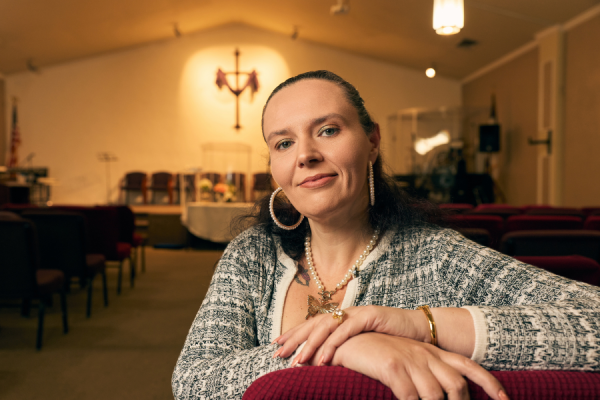
For Georgina L., moving through life with extra weight was never easy.
“It took a lot of energy out of me to do anything,” she says.
What’s more, those unwanted pounds made it difficult to enjoy activities with her children.
“It would make me feel bad, because I couldn’t do the things that I wanted to do with them as a mother,” Georgina says.
Georgina had been overweight since she was a little girl. But in 2016, she began a life-changing weight-loss journey. Georgina underwent gastric sleeve bariatric (weight-loss) surgery. She lost weight after the surgery, but she regained some after becoming pregnant.
Georgina then had gastric bypass surgery in 2023. That surgery also was successful, but over time it became less effective, and Georgina’s weight loss began to plateau. She was stuck at a range between 220 and 230 pounds, short of her goal of weighing less than 200 pounds.
Even though she hadn’t hit her goal, Georgina had lost a significant amount of weight after her bariatric surgeries. As a result, she’d developed excess loose skin — a not-uncommon result of a large weight loss like Georgina’s, as well as her past pregnancies and cesarean sections.
Loose skin is much more than just a cosmetic issue; it can cause chafing, rashes, infections, and pain.
Georgina’s loose skin was affecting her daily life. It made it very hard to move around comfortably. She tried wearing special garments under her clothes to manage the loose skin, but she knew surgery to remove the excess skin would be a better option — except that Georgina’s insurance plan required her to reach a weight of 200 pounds or less before it would cover the procedure.
An endoscopic evaluation offered answers
To help determine why her weight had stalled, Georgina met with Mayada Ismail, MD, ABOM, with the Temple Digestive Disease Center. Dr. Ismail is a gastroenterologist who specializes in endobariatrics.
To help Georgina get past her weight-loss plateau, Dr. Ismail prescribed weight-loss medications. She also performed an endoscopic evaluation to check Georgina’s stomach pouch and the connections from her previous bariatric surgery. This involved passing a flexible tube with a camera through Georgina’s mouth to inspect the area for any issues.
“She checked all possibilities to see why the weight had stayed,” Georgina says.
Dr. Ismail found that the connection between Georgina’s stomach and small intestines had stretched. Because this allows food to pass through more quickly, you can feel hungry sooner and have a harder time controlling your weight.
A non-surgical weight-loss solution
Dr. Ismail explained transoral outlet reduction (TORe) to Georgina as one option to restart her weight loss. TORe is a noninvasive, endoscopic procedure. To perform it, doctors guide an endoscope through the mouth and into the digestive system.
They then place sutures to tighten the connection between the stomach and the small intestine (outlet) that has stretched after earlier gastric bypass surgery. This helps slow how quickly food leaves the stomach and restores a feeling of early fullness so that it’s easier to continue losing weight.
Dr. Ismail explained every detail of the procedure carefully and made sure Georgina felt comfortable throughout the process.
“Dr. Ismail showed me a video and pictures of my stomach,” Georgina says. “She told me how they would go in and do a stitch, and the stitch would work sort of like a pull string on a laundry bag. When they pulled it, it would tighten it, and they would only tighten it to a certain extent.”
Because TORe is performed endoscopically through the mouth, there are no surgical incisions. Patients typically go home the same day without a hospital stay. That’s part of what Georgina liked about the endoscopic weight-loss option Dr. Ismail offered her.
“I don’t really like scars and incisions,” she says. “Even my bariatric surgeries were laparoscopic.”
Dr. Ismail performed Georgina’s endoscopic weight-loss procedure in March 2026. Georgina also had ulcers (sores in the stomach) that Dr. Ismail had found during the endoscopic evaluation. Although these ulcers were unrelated to Georgina’s weight-loss journey, Dr. Ismail was able to treat them during the TORe procedure, as well. Afterward, Georgina followed a post-procedure liquid diet before gradually transitioning to solid foods.
Moving freely, living healthfully
Georgina’s endoscopic weight-loss procedure was successful. It helped her regain control of her weight.
And now Georgina has reached another milestone in her journey. In July, she underwent skin-reduction surgery at Temple, which has allowed her to move freely without pain.