
In 2025, Temple Health performed more lung transplants than any health system in the country, setting a new record of 179 procedures in a single calendar year. This achievement reflects decades of advances in state-of-the-art care and underscores Temple’s role as a national referral center for patients seeking advanced lung treatment.
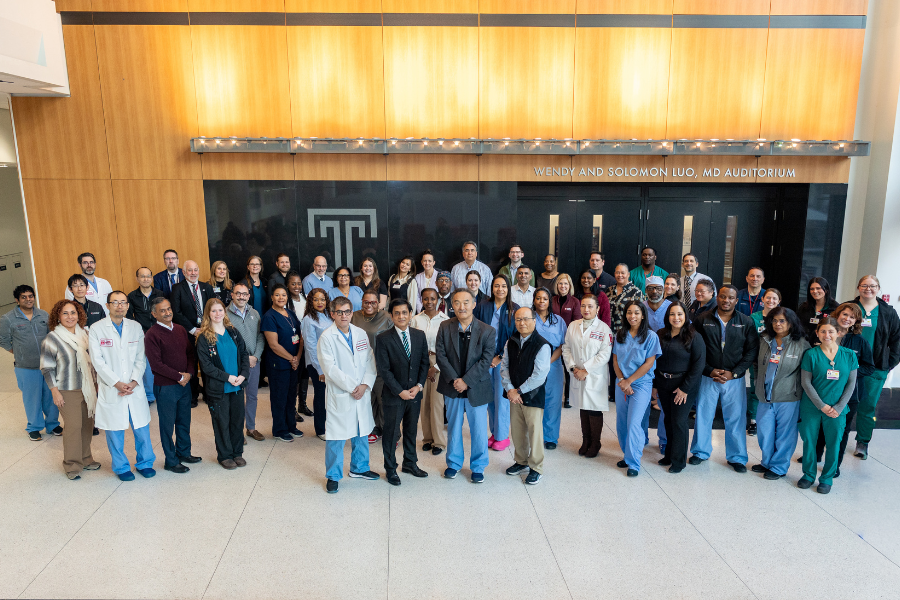
Members of the Temple Lung Transplant team.
“Temple has established itself as the premier destination for advanced multidisciplinary care among the nation’s leading academic medical centers,” said Abhi Rastogi, MBA, MIS, President & CEO of Temple Health.
“This lung transplant milestone speaks to the remarkable expertise of our physicians and support teams,” he continued. “The clinical and operational excellence that made it possible will continue to serve as a model for our pioneering efforts to advance global standards of care—from medical interventions and cancer care, to complex surgical procedures to groundbreaking research.”
The Temple Lung Center’s integrated model combines clinical and research innovation, technically advanced multidisciplinary care, and world-renowned subspecialty expertise to deliver lifechanging outcomes for the entire spectrum of pulmonary conditions. That approach has established Temple’s reputation among patients and referring physicians as a haven for those with complex conditions who have exhausted all other treatment options or are considered ineligible for transplant elsewhere.

(From left) Abhi Rastogi, Dr. Toyoda, Dr. Criner, and Dr. Cordova.
More Treatment Options for the Most Complex Conditions
Temple provides personalized treatment and specialized care for every patient, from those with common conditions to the most complex pulmonary disorders. Many patients who receive lung transplants at Temple Health have been diagnosed with COPD and advanced emphysema, bronchiectasis, interstitial lung disease, pulmonary hypertension, or cystic fibrosis. They may also have comorbidities and/or an advanced age or BMI that leads other transplant centers to deem them ineligible for transplant.
But that’s not the case at Temple Health—where the team’s deep experience, pioneering innovations, and interdisciplinary approach allows them to successfully transplant even the most challenging cases.
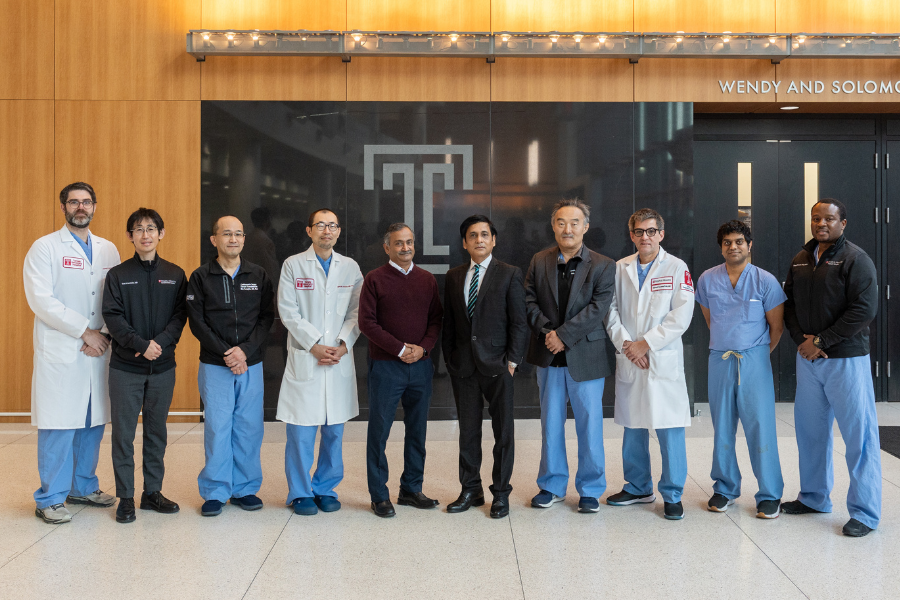
The Temple Transplant Surgery team. (From left) Dr. Aaron Dezube, Dr. Taiki Kawaida, Dr. Roh Yanagida, Dr. Hiromu Kehara, Dr. Ravishankar Raman, Dr. Kewal Krishan, Dr. Toyoda, Dr. Manuel Caceres Polo, Dr. Jigesh Baxi, and Dr. Nosayaba Enofe.
“At Temple, we look at the complete clinical picture for each patient, including their potential for recovery and overall quality of life,” explains Gerard J. Criner, MD, FACP, FACCP, Director of the Temple Lung Center and Founding Chair and Professor of Thoracic Medicine and Surgery at the Lewis Katz School of Medicine at Temple University. “We conduct shared decision-making with the patient and their family/support team to develop a treatment plan that is medically realistic and always aligned with the patient’s goals.”
“Many patients who present to us have chronic, end-stage pulmonary disease and have exhausted all other options medically and therapeutically,” says Francis C. Cordova, MD, Medical Director of the Lung Transplantation Program at Temple University Hospital. These patients have often been turned down by other top transplant centers—but Temple can provide this lifesaving care.
Clinical Innovation Expands Transplant Access
To expand access to transplant, Temple’s highly-experienced physician-scientists leverage the latest clinical innovations and technologies. “At Temple, we’re always on the lookout for even the smallest advantage for our patients, and that includes conducting continuous research and exploring surgical and technological advances,” says Yoshiya Toyoda, MD, PhD, Surgical Director of Thoracic Transplantation and Chief of Cardiovascular Surgery at Temple University Hospital.
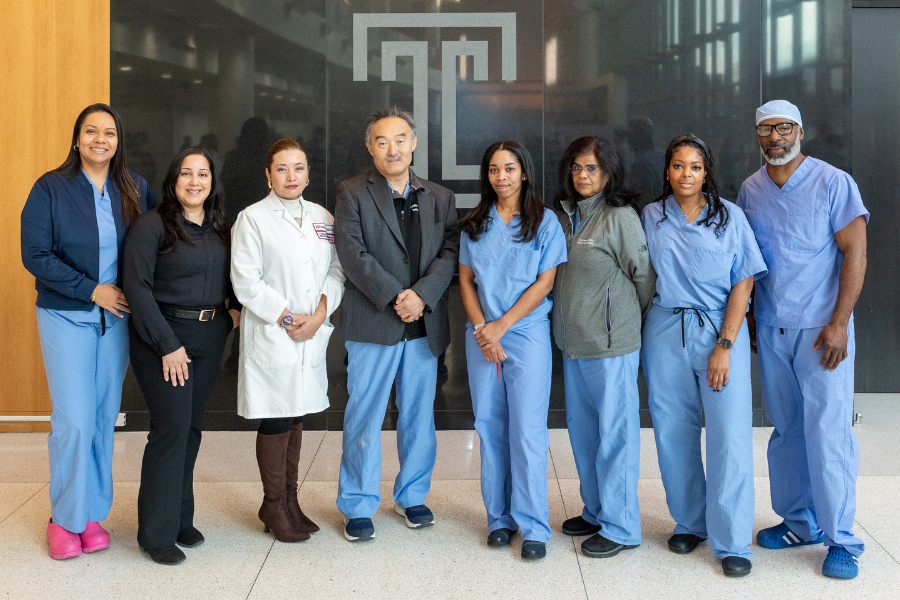
Members of Temple's Transplant OR team: Sadiyyah Reynolds, Myeisha Hamms, Ana Velez, Dr. Toyoda, Mariel V. Gonzalez, Aniamma Jacob, and Damon Lewis.
Dr. Toyoda is internationally recognized for pioneering the minimally invasive antero-axillary approach to lung transplantation. This technique utilizes smaller incisions, which reduces infection risk, causes less tissue trauma, and results in smaller scars. It also offers patients a quicker and easier recovery, with less time spent in the intensive care unit and hospital overall.
Toyoda also performs concurrent coronary artery bypass grafting (CABG)—a complex procedure unique to the Temple Lung Center—at the time of transplantation. This makes successful lung transplant possible for patients with heart disease: a common comorbidity with advanced lung disease, and a reason many are turned down at other transplant centers.
Toyoda and his colleagues also use single rather than double transplantation in select cases, which can reduce surgical morbidity and length of hospital stay for patients with interstitial lung disease and advanced age. They also use advanced organ preservation technologies like temperature- and pressure-controlled systems and ex-vivo lung perfusion, which allow donor lungs to be utilized when they might have otherwise been declined due to long travel distances or viability concerns.
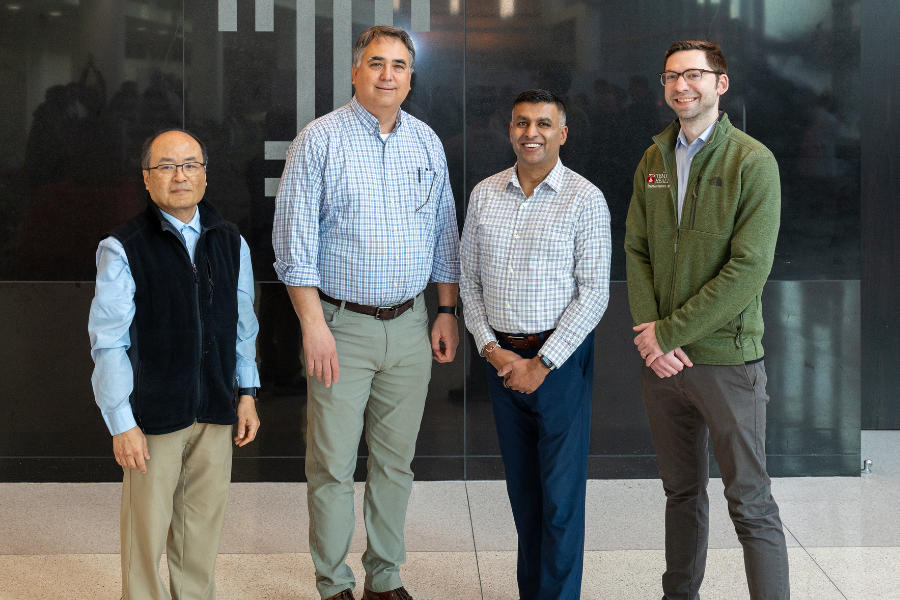
Temple's Transplant Pulmonologists: (From left) Dr. Cordova, Dr. Nathaniel Marchetti, Dr. Kartik Shenoy, and Dr. Stephen Dachert.
Multidisciplinary Expertise for Individualized Care
These leading-edge innovations are part of a treatment philosophy that ensures every patient receives individualized, holistic care. Patients work with a team of world-renowned physicians, surgeons, nurses, transplant coordinators, and other specialists dedicated to supporting them and their families through every step of the transplant process.
“Patients receive exceptional care at Temple before, during, and after transplantation, from initial testing to lifelong follow-up,” Dr. Criner says. Temple consistently offers the fastest pathway to transplant in the region, prioritizing evaluations and allowing patients to receive lifesaving care quicker than anywhere else. The health system also provides personalized post-operative care planning and can coordinate follow-up treatment closer to home for patients who have traveled long distances.
It's an approach that’s led over 1,400 patients to choose Temple for lung or heart-lung transplant since the Lung Center was founded in 1994. It’s also made Temple Health the national leader in lung transplant—performing more surgeries, treating more complex conditions, and caring for patients others can’t.
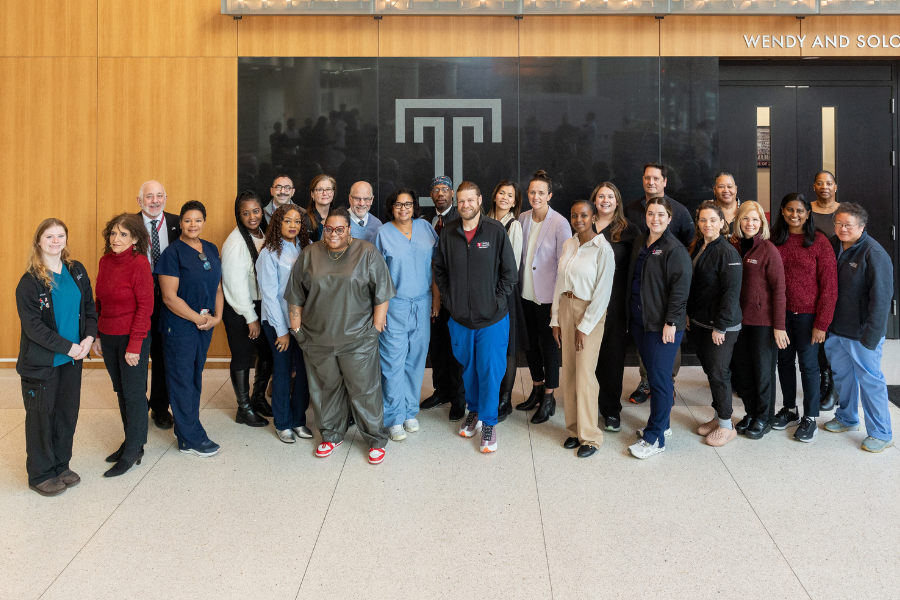
Temple’s Nurse Coordinators, Advanced Practice Providers, Support Coordinators, and Procurement and Nutrition team members (from left): Darien Dempsy, Sharon Delbono, Dawne Thornton, Barry Friedman, Chimere Stewart, Dawnn Bradley, Ebonye Conyon, Daniel Remer, Ruth Christner, Paul Reid, Gwen Vance, William Stallings, Chris Toner, Diane Lian, Ashley Johnson Whiting, Yetunde Ayorinde, Kelsey Adams, Sarah Ritter, Vince Gonzales, Amanda Little, Mary Tarczewski, Molly Mohan, Janet Wong, Cynthia Hammond, and Ramona McClean.