
A new unit at Temple University Hospital-Main Campus (TUH) dedicated to inpatient addiction care is receiving regional and national recognition for the impact of its unique combination of advanced clinical care and ongoing recovery support.
New Approach to a Complex Problem
Opened in September 2025, Temple Health’s Intermediate Care Unit (IMCU) is designed to provide holistic care for patients suffering from substance use disorder (SUD) in response to the opioid epidemic. A 2025 survey by the Pew Research Center revealed that nearly 44% of Philadelphians personally know someone with an opioid use disorder, and one-third of residents reported knowing someone who has died from an overdose.
"Our mission is to meet patients where they are and ensure they are treated with the dignity and care they deserve,” said Frank Evans, RN, director of nursing for the IMCU. “We’re proud of the impact that this quality of care is making in the community.”
Temple’s new approach centralizes treatment for high-acuity SUD patients, creating a consistent, specialized environment for withdrawal management and successfully transitioning patients into ongoing recovery support. This approach also preserves vital capacity in the hospital’s intensive care unit.
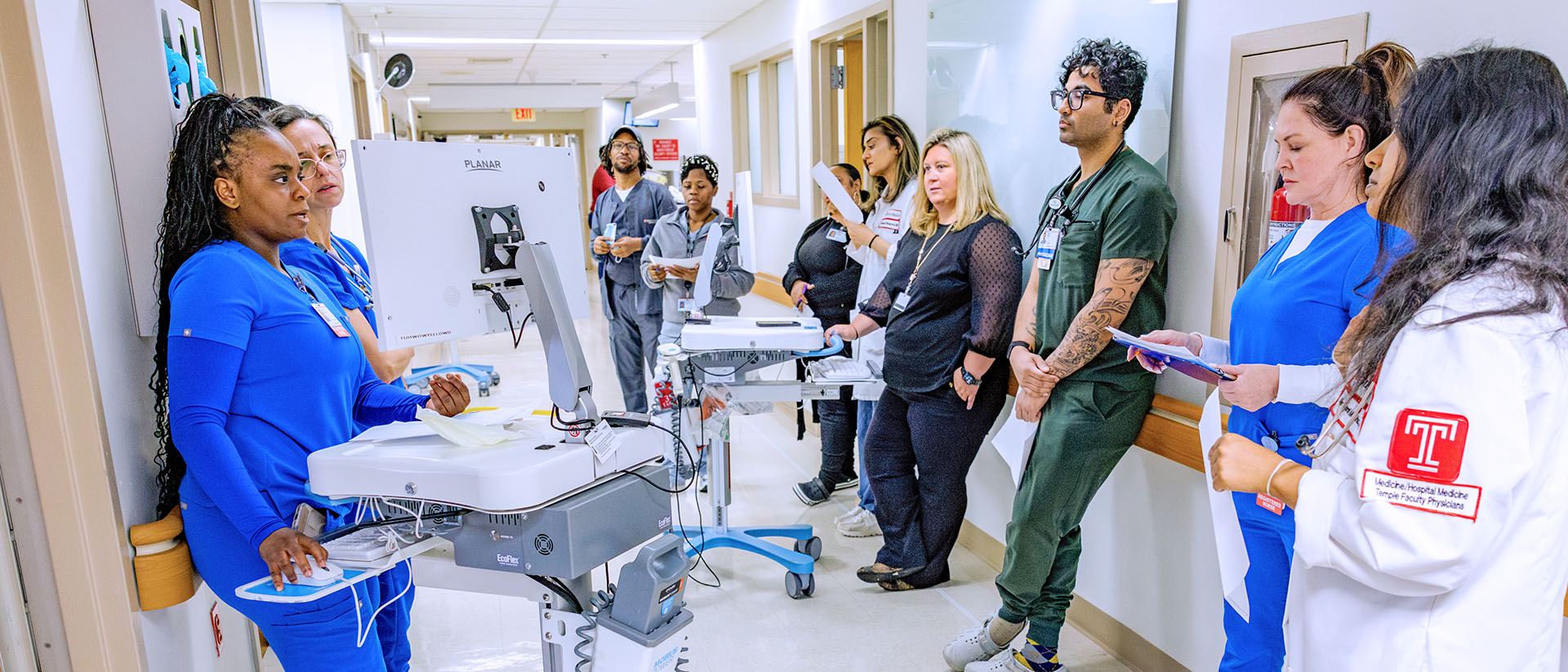
Impressive Results and Real Impact
The IMCU is improving patient access to wrap-around services that support their long-term care, safety, recovery from SUD, and, when applicable, their transition from homelessness to independent living, said Patrick Vulgamore, director of TUH’s addiction medicine service line.
“Temple Health is best equipped to lead addiction treatment, and the IMCU is a prime example of our ability to do so with creativity, innovation, and care and empathy for the patient,” Vulgamore said.
Within just nine months, the team has made a substantial impact in several key areas.
Over 90% of patients are taking advantage of addiction medicine consultations, and 84% of patients are electing to receive medication treatment for their SUD — a 53% increase since the program began.
Additionally, patient engagement with certified recovery specialists has also jumped from 58% to 78%, while the average length of stay and re-admission rate for patients continues to drop.
These statistics translate to more patients finding a pathway to recovery before they leave the hospital, rather than being discharged without clear next steps. Meanwhile, fewer patients returning to the hospital after discharge is an indication that holistic support services are having an impact.
Statewide and National Recognition
Earlier this year, the IMCU team’s work was recognized with the 2026 Optimal Operations Achievement Award from the Hospital and Health System Association of Pennsylvania (HAP). The award celebrates "innovative, patient-centered initiatives that improve care quality, efficiency and community health,” and Temple was selected for optimizing inpatient substance use disorder treatment to increase patient engagement and reduce the length of stay and readmissions.
The IMCU also received the 2026 Modern Healthcare Innovators Award, which “recognizes leaders and organizations making a measurable impact through innovative solutions."
Evans and colleagues have been selected to present their work at the 2026 Vizient Connections Summit, a national conference scheduled for September 2026. The team’s abstract on the IMCU was chosen from nearly 1,300 submissions.
“We have created a model that is truly unique, in that the IMCU’s environment treats the patient from start to finish,” said TUH’s Associate Vice President of Nursing Joanie Madalone, DNP, RN. “The coordination and standardization of care have gotten the IMCU to a beautiful place, and we are incredibly proud of the work to bring life-changing and life-saving outcomes to our patients.”