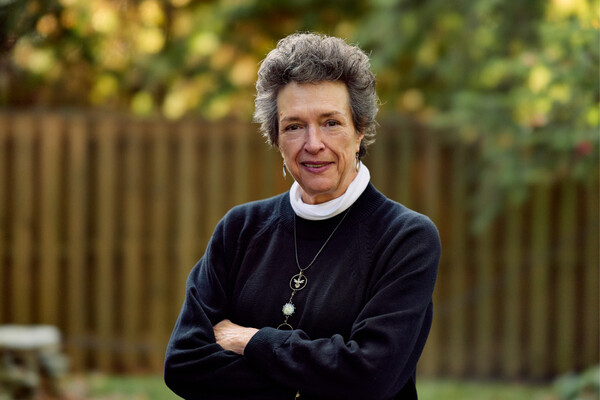
Andrea W. first realized something was wrong in 2013, when she started tiring out easily.
“I was a swimmer, and when it started out, I couldn’t swim as many laps as I used to,” she says. “At the end of a couple reps, I felt out of breath, and that was very unusual.”
Andrea’s local doctor diagnosed her with asthma and prescribed breathing treatments. However, she still felt exhausted and out of breath.
In fact, her decreased stamina and shortness of breath worsened as time went on. They began to affect more and more areas of Andrea’s life. For example, Andrea loved to visit Philadelphia and dine out and listen to music with friends.
“It got to the point where I couldn’t do that anymore,” she says.
At home, Andrea’s symptoms disrupted her daily tasks.
“I could barely walk 15 feet without having to sit down and catch my breath,” she says. “I was getting sicker and sicker.”
Andrea needed answers to why she felt the way she did. In her heart, she knew it wasn’t asthma.
“I just kept advocating for myself and talking to different doctors and trying to get to somebody who could help me,” she says.
Then Andrea made an appointment with a local pulmonologist.
“He said, ‘I know exactly what you have, and I know exactly where you need to go,’” Andrea says. “He called Temple Heart & Vascular Institute while I was sitting in his office.”
Her pulmonologist suspected chronic thromboembolic pulmonary hypertension (CTEPH), a rare type of high blood pressure in the lung circulation that can occur when chronic blood clots block the blood vessels. As pressure builds in those blocked blood vessels, CTEPH strains the heart and can cause right-side heart failure. Andrea’s pulmonologist recommended Temple Health because its Heart & Vascular Institute is home to some of the nation’s top experts in CTEPH and related conditions.
Temple guided Andrea’s specialized care
At Temple, Andrea met with Anjali Vaidya, MD, FACC, FASE, FACP, Director of Temple’s Advanced Pulmonary Hypertension, Right Heart Failure & CTEPH Program.
“I loved her immediately,” Andrea says. “She’s very charismatic, very friendly, and so knowledgeable.”
Dr. Vaidya and her team performed diagnostic tests to confirm and characterize Andrea’s diagnosis. She was so sick, with such advanced heart failure at the time of their initial meeting, that Dr. Vaidya offered a targeted treatment plan that included medications to ease the strain on her heart and reduce pressure in the blood vessels of Andrea’s lung circulation.
Once Andrea became healthy enough for surgery, she was scheduled to have a procedure called pulmonary thromboendarterectomy (PTE). During PTE, surgeons remove clots and scar tissue blocking the lung circulation, easing strain on the heart. Only a handful of hospitals across the country offer comprehensive care for CTEPH. Temple Heart & Vascular Institute’s CTEPH program has a 95% PTE success rate and is the second busiest in the United States.
After her surgery, Andrea’s debilitating symptoms improved significantly.